




Jones Jeep - Which SUV delivers the best factory off-road hardware for weekend trails around Jarrettsville, MD?
Shoppers often ask a simple but important question: which SUV brings more factory-built off-road hardware to the table for weekend trails around Jarrettsville, MD? While both options can handle gravel, mud, and rocky two-tracks, the competitive gaps come from fundamentals you can see and feel. Wrangler leans into mechanical grip and open-air freedom, while Bronco® concentrates on suspension tuning and drive-mode wizardry.
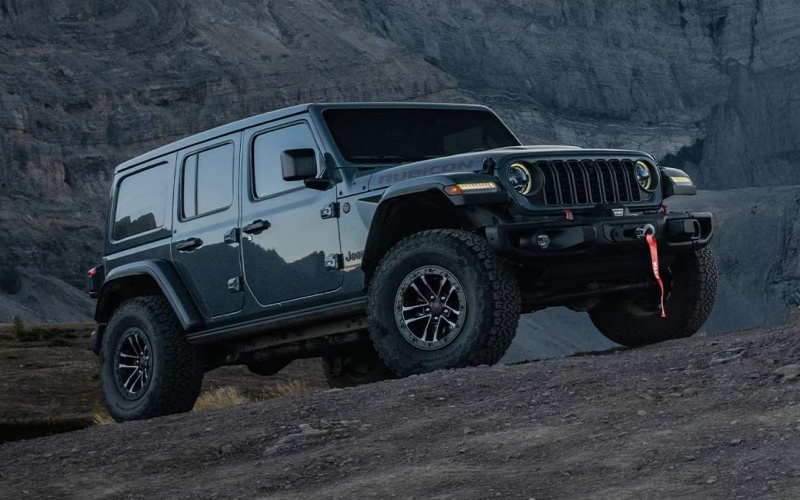
From the factory, Wrangler offers an available plug-in-hybrid 4xe powertrain, a fold-down windshield, and a unique power-retractable roof option, alongside solid front and rear axles, selectable lockers, and an electronic front sway bar disconnect. Bronco® answers with HOSS suspension systems tuned for stability at speed, G.O.A.T. Modes to adjust traction and throttle mapping, available front stabilizer bar disconnect, and offered 35-inch tires in Sasquatch® configurations. Deciding which is “best” depends on your terrain and how you like a 4x4 to feel. If you prefer slow, precise crawling with straightforward mechanical control and unmatched open-air configurations, Wrangler has the edge. If your trail days include higher-speed washboards and frequent surface changes, Bronco®’s suspension tuning and helpful Trail Turn Assist impress.
- Open-air options: Wrangler brings a fold-down windshield, removable doors, and an available power top; Bronco® includes removable doors and roof.
- Front suspension design: Wrangler uses a solid front axle for articulation; Bronco® uses independent front suspension for stability at speed.
- Powertrains: Wrangler offers V6, turbo four, V8, and a PHEV; Bronco® offers turbo-four and twin-turbo V6 options without a V8 or PHEV.
- Trail cameras: Both offer helpful camera tech, with Wrangler’s forward trail view and Bronco®’s available 360-degree views.
- Drive systems: Both offer part-time 4x4 and available full-time/auto 4x4 modes on select configurations.
For weekenders who love rock gardens and technical climbs, Wrangler’s solid-axle poise and gearing options make line choice predictable and repeatable. The electronic sway bar disconnect and locking differentials work with the transfer case rather than around it, and the Off-Road Pages in Uconnect give you useful data without distraction. If your outings involve longer distances between trailheads and fast gravel, Bronco®’s HOSS tuning and G.O.A.T. Modes create a confident rhythm from feature to feature.
Ultimately, the deciding factor is how you want your SUV to communicate with you. Wrangler feels analog-first—mechanical, tactile, and upgrade-ready—while Bronco® feels digital-assisted, with drive modes smoothing out transitions. Neither approach is wrong; it’s about preference and the terrain you see most. Our recommendation for many Jarrettsville-area hobbyists is to test both on a varied loop—ruts, off-camber sections, and a short rock garden—and pay attention to how the front end talks back through the wheel and seat. That feedback tells you which setup will keep you confident when the trail gets interesting.
Jones Chrysler Dodge Jeep Ram will walk you through the hardware differences and help you match axles, lockers, and tops to your routine, serving Owings Mills, Glen Burnie, and Jarrettsville with product specialists who wheel on the same trails you do. Whether your build starts stock or you have a lift, wheel, and tire plan in mind, we will help you choose the right baseline so your SUV grows with your skills.
Frequently Asked Questions:
Can I get a factory V8 or a PHEV in this class?
Wrangler offers both—a V8 on specific trims and a plug-in-hybrid 4xe—while Bronco® does not offer a V8 or PHEV at this time.
Which is easier to upgrade for slow-speed crawling?
Wrangler’s solid axles accept lift kits, lockers, and gearing changes with fewer compromises, making it a favorite foundation for technical trail builds.
Request more 2026 Jeep Wrangler information
Categories:
Jeep Wrangler